Electrical installations for offices
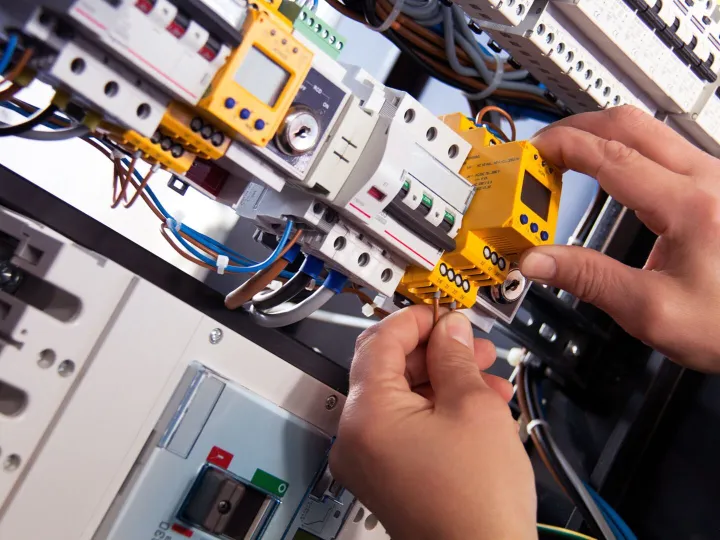
Planning for electrical installations
When you plan electrical installations for offices, your decisions affect safety, productivity, and costs over the long term. A solid planning guide helps you comply with regulations, stay flexible, and save energy while making it easier to work with designers, landlords, and contractors.
Modern offices rely on power and data for everything from workstations and meeting room AV to EV charging and server rooms. Poor planning can lead to overloaded circuits, awkward layouts, and costly changes later.
We look at how to calculate electrical loads for office buildings, what to consider for CAT A and CAT B fit-outs, how to follow BS 7671 wiring rules, and where LED lighting offers the greatest value. We also examine emergency lighting and fire alarms and share examples of projects that cut energy and maintenance costs through smart design.
Understanding office electrical demand
To start planning office electrical installations, you need a clear idea of how much power you’ll use. Without this, even top-quality equipment won’t perform as intended. Load calculations estimate the total power required for workstations, IT, kitchens, HVAC, and special equipment, and account for diversity to avoid oversizing every circuit.
Industry guidelines use typical watts per square metre for open-plan offices. UK case studies show that efficient designs can operate at about 80–120 W/m² for combined power and lighting, provided that large mechanical loads are managed separately. This analysis helps you determine the appropriate supply size, distribution boards, and space for future growth.
In multi-tenant offices, it’s important to separate landlord and tenant loads and use sub-meters for each area to deliver fair billing and accurate energy tracking. A good planning guide should cover both current needs and potential changes, such as more hot-desking, increased laptop use, or new servers, so your setup can adapt without major rewiring.
CAT A and CAT B fit-out
Many commercial electrical installations for offices are carried out in two stages: a base build installation) provided by the landlord, and a customised (CAT B)office fit-out tailored to the occupier. CAT A typically includes main distribution, basic lighting, small power in core areas and life-safety systems; CAT B then reconfigures or expands these systems to create meeting rooms, cellular offices, collaboration spaces and specialist areas.
In major UK cities, it is common for landlords to provide a flexible CAT A shell, with suspended ceilings, raised floors, and a general services grid, intended to accommodate a range of tenant layouts. In the CAT B stage, the design team adjusts LED lighting to fit tasks and branding, moves or adds floor boxes and desk power, and coordinates power with cabling, AV, and furniture.
Real project examples show that early teamwork among engineers, designers, and furniture experts can reduce rework, especially when meeting room plans change. Treating CAT A and CAT B as one system helps avoid duplication, control costs, and create a unique, practical space.
Compliance with wiring regulations
All commercial office electrical installations in the UK must follow BS 7671 wiring regulations. These rules cover cable sizing, protection against electric shock, fault protection, and the selection and installation of equipment. The latest edition and updates must be used for new work or major changes.
For offices, this usually means using appropriate protective devices, keeping circuits separate, and ensuring that distribution boards and cable routes are safe and easy to maintain. Independent surveys have identified common issues in commercial offices, including overloaded multi-way adaptors, poorly finished connections, and undocumented changes. A robust inspection and testing routine, including initial checks and regular inspection reports, is essential to demonstrate ongoing compliance and satisfy insurers and regulators.
For occupiers, hiring NICEIC, or similarly approved contractors and insisting on appropriate documentation and as-installed drawings ensures the office electrical planning guide is followed on site.
Lighting, comfort and efficiency
Lighting is a key component of office electrical installations, affecting both energy use and employee well-being. Good LED lighting design balances brightness, glare, and colour to help people work comfortably for long periods. UK offices often use CIBSE and EN standards for recommended light levels.
Studies show that switching from fluorescent to high-quality LED lighting, combined with daylight sensors, can reduce lighting energy use by 50 to 70 per cent, improve comfort, and lower maintenance costs because LEDs have a longer lifespan. Integrating controls is important. Features such as presence or absence detection, daylight dimming, and time-based scheduling help align lighting use with actual occupancy patterns.
In practice, this could mean zoned controls for open-plan areas, separate scenes for meeting rooms, and specific task lighting for reception or breakout areas. Connecting the lighting system to a facility management system, if available, offers more ways to monitor and optimise. When planning office electrical systems, consider how lighting supports flexible work patterns, such as hot-desking and part-time occupancy, and how it reflects your brand and culture.
Emergency systems and resilience
Life safety, along with resilience, is a non-negotiable requirement for commercial electrical installations in offices. Emergency lighting and fire alarm systems must comply with British and European standards to ensure occupants can evacuate safely in the event of a power failure or fire. Fire alarm design must coordinate sounders, call points, detectors, and interfaces with plant systems, such as smoke-extraction fans and lift controls; improper integration can lead to false alarms or unsafe conditions.
Beyond legal requirements, many occupiers now expect greater resilience, especially for offices that support key operations or host on-site IT systems. This can mean using uninterruptible power supplies in communications rooms, dual feeds for critical equipment, and separate distribution for core services.
Case studies from financial and technology firms show that focusing on targeted resilience rather than making every circuit critical can reduce risk at a lower cost. An experienced design and installation team can help determine which loads really need backup and design the office electrical systems accordingly.
Working with designers and contractors
To deliver good office electrical installations, clients, designers, and contractors should work together from the beginning. Providing a clear brief, including staff numbers, work patterns, and any special equipment, helps the design team develop a plan that meets your real needs. Early meetings can clarify details such as the amount of CAT B work required, where to place comms rooms, and how to power furniture in flexible workspaces.
When choosing contractors, pick firms with proven experience in commercial fit-outs, knowledge of BS 7671 wiring rules, and good references. Reviews of completed projects show that clients who invest time in design coordination and testing have fewer problems later.
It’s also wise to plan for future changes by leaving spare space in distribution boards, using accessible cable routes, and clearly labelling components. Treating the electrical system as something that can adapt, not just a one-time setup, helps your office stay flexible and work well over time.
Set your planning goals
Office electrical installations impact every part of workplace performance, including safety, comfort, flexibility, and cost. A well-structured planning guide, based on accurate load calculations and adherence to BS 7671 rules, helps you build a robust setup that can accommodate new technologies and evolving work styles. Focusing on CAT A and CAT B fit-outs, smart LED lighting, and reliable emergency systems helps create a workspace that is functional and safe for everyone.
If you’re planning a new office or updating an old one, now is a good time to work with experienced office fit-out designers and contractors. Share your long-term goals, and ensure your brief covers both current and future needs. Request detailed proposals and examples of past projects, and ensure maintenance and testing plans are clear from the outset. By treating office electrical installations as a smart investment, not just a task to complete, you can create a safe, flexible, and energy-efficient space that supports your business for years to come.